What Causes Low Water Pressure in Older Homes in Calvert County, Maryland?
Preventing Leaks and Water Damage
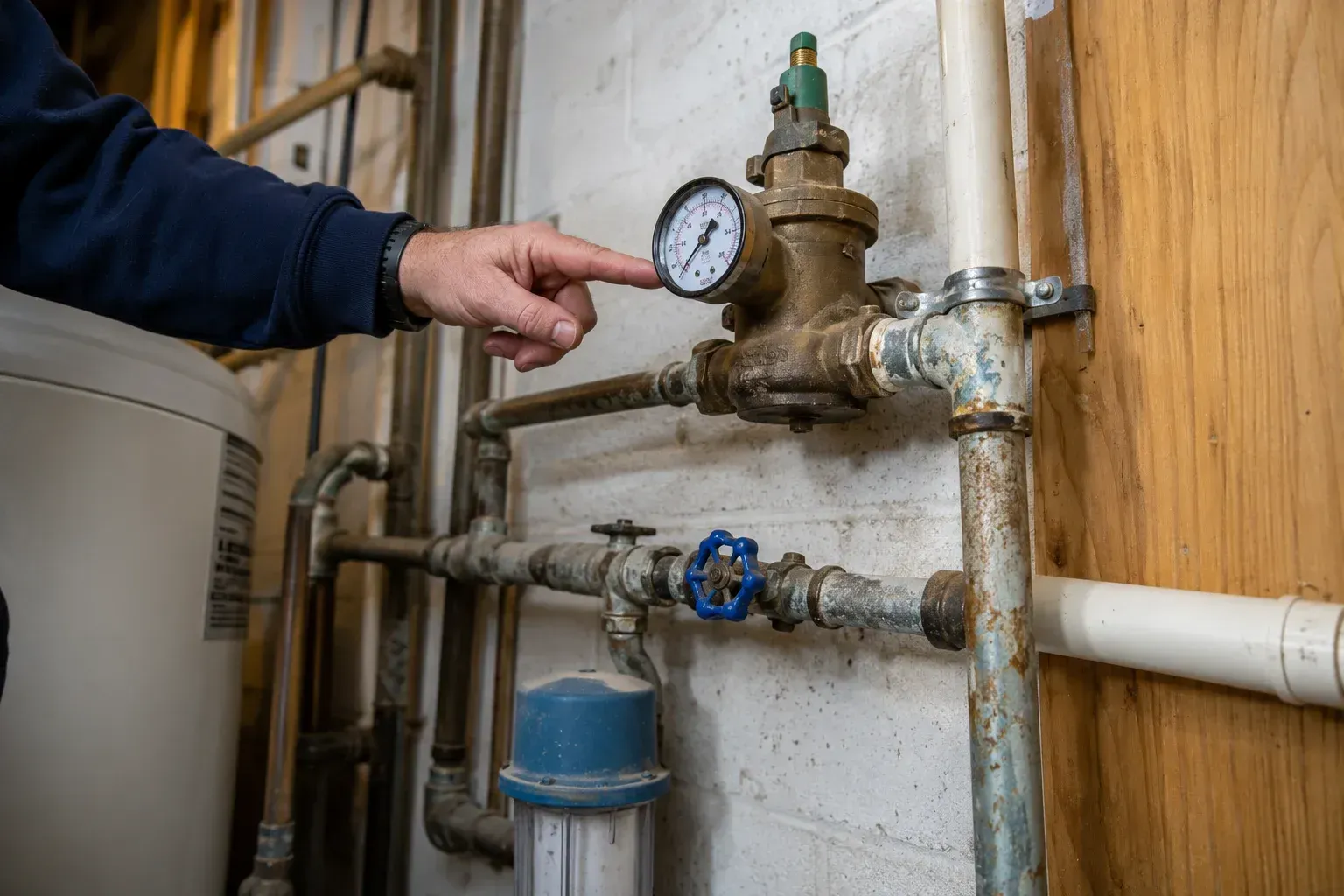
Table of Contents
- Introduction
- Why Older Homes in Calvert County Struggle With Water Pressure
- Aging Pipes and Corrosion Problems
- Mineral Buildup From Hard Water
- Hidden Leaks and Water Loss
- Pressure Regulator Failures
- Municipal Water Supply Issues
- How to Identify Where the Problem Starts
- Diagnosing Specific Fixtures vs. Whole-House Problems
- When to Call a Professional Plumber
- Conclusion
- Summary
- Frequently Asked Questions
Key Takeaways
- Low water pressure in older Calvert County homes usually stems from aging pipes, mineral deposits, or hidden leaks rather than municipal supply issues.
- Galvanized steel pipes common in homes built before the 1980s are prone to internal corrosion that restricts water flow.
- Mineral buildup from hard water is a frequent problem in Calvert County and can be addressed through cleaning or water treatment.
- Pressure regulator failure and leaks are fixable issues that shouldn't be ignored, as they waste water and damage your home.
- Identifying whether the problem affects your whole house or just specific fixtures helps determine the cause and solution.
Introduction
Low water pressure in older homes throughout Calvert County usually comes from internal pipe problems, mineral deposits, or equipment failures that have developed over decades rather than issues with the municipal water supply itself. When you turn on a faucet and water trickles out instead of flowing steadily, the cause is almost always something within your own plumbing system that you can address.
Understanding what's behind low water pressure matters because it affects daily life - from showering to watering your garden - and it can signal larger problems developing in your plumbing system. Older homes in Calvert County have unique challenges because of their age, the local water chemistry, and the materials used when they were built. Knowing what to look for helps you take action before the situation gets worse.
Why Older Homes in Calvert County Struggle With Water Pressure
Homes built in Calvert County decades ago were often installed with different plumbing materials than what's used today. The combination of time, the area's water chemistry, and normal wear and tear creates conditions where water pressure drops gradually or suddenly.
Calvert County's water has higher mineral content than many regions - a condition called hardness - that affects pipes and fixtures over time. The local geology contributes minerals like calcium and magnesium to groundwater, which accumulates inside pipes and reduces the space available for water to flow through.
Age is the biggest factor. A home built in 1960 has been dealing with water flowing through its pipes for over 60 years. Even quality materials degrade under constant pressure and exposure to minerals and chlorine from the water supply.
Aging Pipes and Corrosion Problems
The most common cause of water pressure problems in older Calvert County homes is what's happening inside the pipes themselves - specifically corrosion and rust buildup.
Many homes built before 1980 used galvanized steel pipes. Galvanized pipes are steel coated with zinc to resist rust, but that coating only delays the problem. After 40 to 60 years, the zinc coating wears away and the steel underneath rusts from the inside. This rust creates a rough, bumpy interior surface that slows water flow and gradually narrows the pipe opening.
Copper pipes are more durable, but they corrode too if your water is too acidic. Acidic water - indicated by a pH below 7 - eats away at copper from the inside, creating small pinholes and rough interior surfaces that both reduce pressure and eventually cause leaks.
Once internal corrosion starts, there's no way to reverse it. Cleaning might temporarily improve flow, but the rust returns. Eventually, the pipe needs replacement. If you have an older home with galvanized steel pipes, expect pressure problems as the pipes age.
Mineral Buildup From Hard Water
Calvert County's hard water leaves mineral deposits everywhere water sits or flows slowly - inside pipes, at aerators on faucets, and in fixtures. These deposits accumulate like plaque in arteries, narrowing the space where water can pass through.
When hard water flows through a pipe, minerals precipitate out and stick to the inside walls. This buildup happens slowly and steadily. After years, the effective diameter of the pipe shrinks noticeably. A pipe that was originally 3/4 inch wide might only allow water through a space half that size.
You can see this problem at work by unscrewing the aerator - the screen at the tip of your faucet - and looking inside. White, chalky mineral deposits are usually visible. If that's happening on the outside of the aerator, it's definitely happening on the inside of your pipes too.
Hot water lines suffer more from mineral buildup than cold water lines. If you notice that hot water pressure is much worse than cold water pressure, mineral deposits in your water heater and the pipes leading from it are the likely culprit. This is especially common in older homes where the water heater has been running for many years without descaling.
Hidden Leaks and Water Loss
A leak somewhere in your plumbing system between the meter and your fixtures wastes water and reduces the pressure reaching your faucets and showers. The leak might be inside a wall, under the floor, or outside underground - places you can't easily see.
Signs of hidden leaks include a water meter that keeps running even when all fixtures are off, wet spots on walls or ceilings, soft patches in your yard that stay wet, or an unusually high water bill. Some leaks are slow enough that you won't notice standing water, but they're still stealing pressure.
The older your home, the more likely you have leaks. Pipes degrade, pressure stress creates cracks, and connections weaken over time. Once a leak starts, it gets worse progressively unless repaired. Water escaping through the leak is water that never reaches your fixtures.
Identifying exactly where a leak is located sometimes requires professional equipment that can detect water flow under concrete or behind walls. Don't ignore signs of leaks - they cause water damage and increase your water bill significantly.
Pressure Regulator Failures
Every home has a pressure regulator where the water line enters from the street. This device reduces the street pressure to a safe level for household plumbing - typically 40 to 60 pounds per square inch. When it fails, pressure either spikes dangerously or drops too low.
If your pressure regulator fails in the low direction, you'll experience weak flow throughout your home. Regulators can get stuck, clogged with mineral deposits, or simply wear out after many years. Replacing a failed regulator is straightforward and inexpensive compared to other plumbing repairs.
You can test your water pressure using an inexpensive gauge that screws onto a faucet. Normal household pressure is 40 to 80 PSI. If your reading is consistently below 40 PSI and you haven't found problems with individual pipes, the regulator is a likely culprit.
Municipal Water Supply Issues
Sometimes the problem isn't in your home at all - it's in the municipal water system. Calvert County's public water supply occasionally experiences pressure fluctuations due to main breaks, high demand periods, or maintenance work.
You can tell if it's a municipal issue by calling your water company to ask if they're aware of pressure problems in your area. They'll have records if they're working on lines or if they've received complaints from other customers. If the low pressure is affecting your whole neighborhood simultaneously, the source is likely the municipal system.
Most of the time, though, when your home has low pressure while neighbors don't, the problem is within your plumbing system. Municipal pressure problems are usually temporary and affect multiple homes, not just yours.
How to Identify Where the Problem Starts
Start by checking whether low pressure affects your entire home or only specific fixtures.
If only one faucet has low pressure, the problem is local to that fixture - likely mineral buildup in the aerator or inside that particular line. Unscrew the aerator and soak it in vinegar to dissolve minerals. If pressure improves after cleaning, you've found the issue.
If low pressure affects an entire bathroom or section of your home, the problem is in a larger pipe serving that area. This could be a leak, corrosion, or mineral buildup in a main line.
If every fixture in your home has low pressure, check your main shutoff valve. Sometimes debris gets stuck in the valve seat and partially closes it. Turn the valve back and forth several times to see if pressure improves. If not, the issue is either your pressure regulator, a whole-house leak, or corrosion throughout your main water line.
Diagnosing Specific Fixtures vs. Whole-House Problems
Testing your water pressure at different points tells you a lot about what's happening.
Check cold water pressure at a kitchen sink and a bathroom sink in different parts of your home. Check hot water pressure too. Are some fixtures fine while others are weak? This pattern points to specific lines or fixtures needing attention.
Now check the outdoor hose bib if you have one. Older hose bibs are notorious for leaking internally and for getting clogged with mineral deposits. If your hose bib has low pressure but indoor faucets are okay, the problem is localized to that line.
If pressure is consistently low everywhere, at every fixture, then your issue is upstream - either the main line, the pressure regulator, a major leak, or corrosion throughout the entire system.
When to Call a Professional Plumber
Some water pressure issues are simple fixes you can handle yourself - cleaning aerators, tightening valve handles, or using a water pressure test gauge. But other causes require professional equipment and expertise.
You should call a plumber if you suspect a hidden leak, if mineral buildup is widespread throughout your home, if you think your pipes are corroded, or if replacing your water supply pipes might be necessary. A professional can use video inspection equipment to see inside pipes, find leaks through walls and under floors, and test pressure at multiple points to pinpoint the exact cause.
If your pressure regulator is failing, a plumber can replace it quickly. If your pipes need cleaning or replacement, they'll recommend the best approach for your specific situation. Sometimes a water conditioning system solves mineral buildup problems. Other times, pipe replacement is the only lasting solution.
Conclusion
Low water pressure in older Calvert County homes has identifiable causes - most often aging pipes with internal corrosion, mineral deposits from hard water, hidden leaks, or pressure regulator failure. The problem is rarely the municipal water supply unless your neighbors are experiencing it too.
Figuring out where your pressure problem originates starts with simple observation - does it affect your whole home or just certain fixtures? Is your water meter running when nothing is turned on? What does the water look like - discolored or cloudy? These clues point you toward the real issue.
Once you know what's causing low pressure, you can decide whether it's a DIY fix like cleaning aerators or a job that needs professional attention like finding hidden leaks or replacing corroded pipes. The important thing is to address it rather than accept weak water flow as normal.
Summary
If you're dealing with low water pressure and aren't sure what's causing it, having a professional evaluate your system can save you time and money. They can identify whether your issue is something simple or a larger problem developing in your plumbing. Getting a clear diagnosis helps you understand what needs to happen next and prevents small problems from turning into major damage. Whether your solution is straightforward or involves more extensive work, knowing what you're dealing with puts you in control.
Frequently Asked Questions
Q: Can low water pressure damage my plumbing or appliances?
A: Yes. Low pressure can cause issues with appliances like dishwashers and washing machines that need adequate flow to operate properly. More importantly, if low pressure is caused by a leak or corrosion, the underlying damage will get worse over time and eventually cause water damage in your home or a complete pipe failure.
Q: Is low water pressure in old homes always a sign that pipes need to be replaced?
A: Not necessarily. Sometimes the issue is mineral buildup that can be addressed with cleaning, a failed pressure regulator that's inexpensive to replace, or a local leak that can be fixed. A professional inspection can determine whether replacement is needed or whether a simpler fix will solve your problem.
Q: Why does one bathroom have low pressure but others don't?
A: This usually means the issue is specific to that bathroom's plumbing line rather than your whole system. Check the aerators on those fixtures first - they might just need cleaning. If that doesn't help, the problem is likely corrosion or mineral buildup in that particular line or a slow leak in that section.
Q: Should I use a water softener if my low pressure is from hard water?
A: A water softener prevents future mineral buildup and can improve pressure over time by keeping minerals from accumulating in pipes and fixtures. However, if significant buildup already exists inside your pipes, a softener alone won't improve pressure - you'd need cleaning or pipe replacement first.
Q: Can I test my water pressure myself?
A: Yes. You can buy an inexpensive pressure gauge that screws onto a faucet or hose bib. Normal household pressure is 40 to 80 PSI. If you're consistently below 40 PSI, you have a pressure problem worth investigating.
Q: What's the difference between low pressure caused by a leak versus corrosion?
A: With a leak, water is leaving your system entirely and you'll see signs like wet spots, a running meter, or a high water bill. With corrosion, water stays in the pipes but flows through a narrowed space, so you lose pressure but not water. Finding which one you have requires checking for these visible signs or having a professional inspect your system.
Q: How much does it cost to fix low water pressure in an older home?
A: It depends on the cause. Cleaning aerators is free. Replacing a pressure regulator costs $150 to $300. Finding and fixing hidden leaks can cost $500 to $2000. Descaling pipes costs $500 to $1500. Full pipe replacement is significantly more expensive and depends on how many pipes need replacing and whether they're accessible.