How Much Does It Cost to Replace a Water Heater in Tracys Landing, MD?
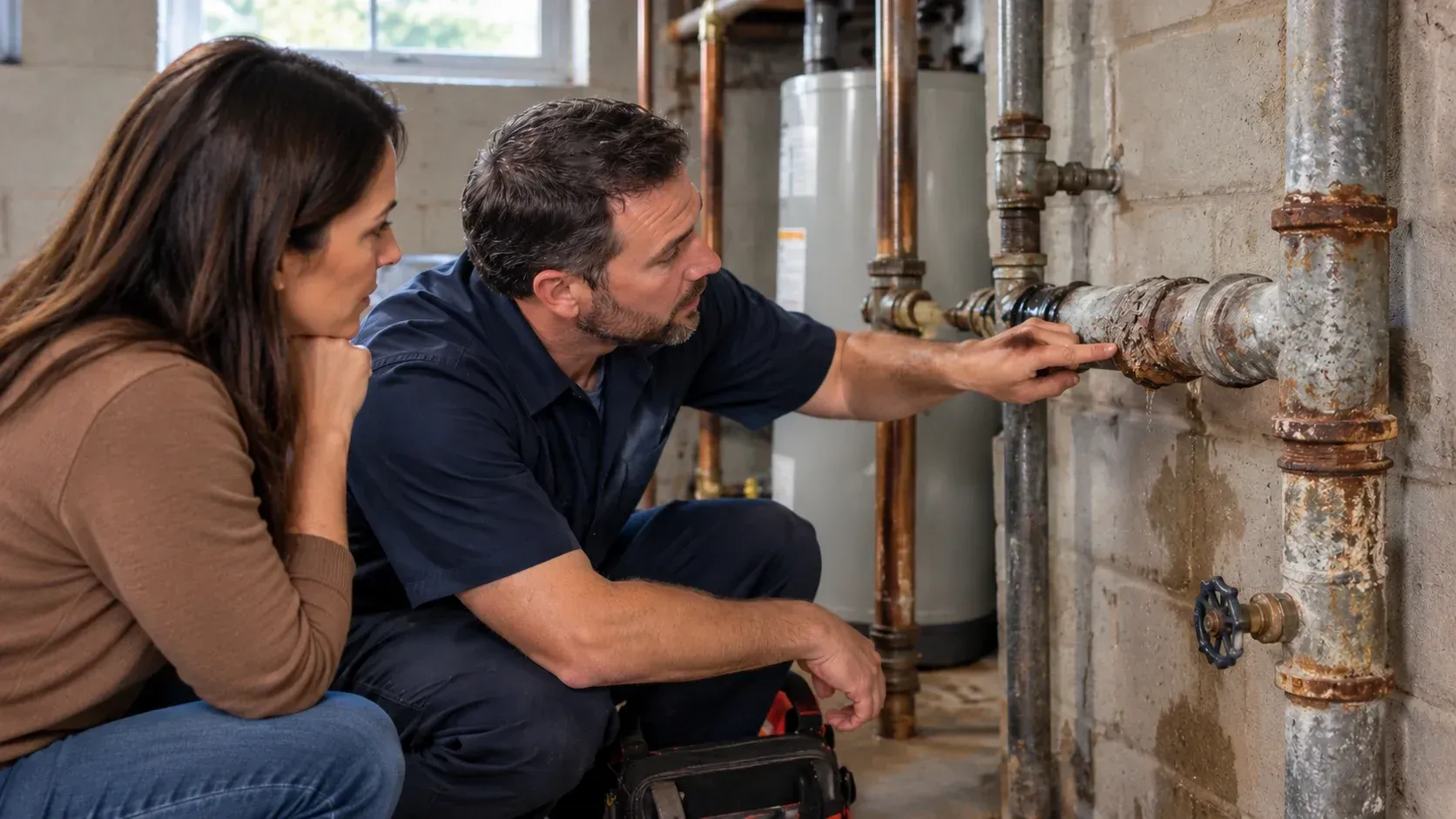
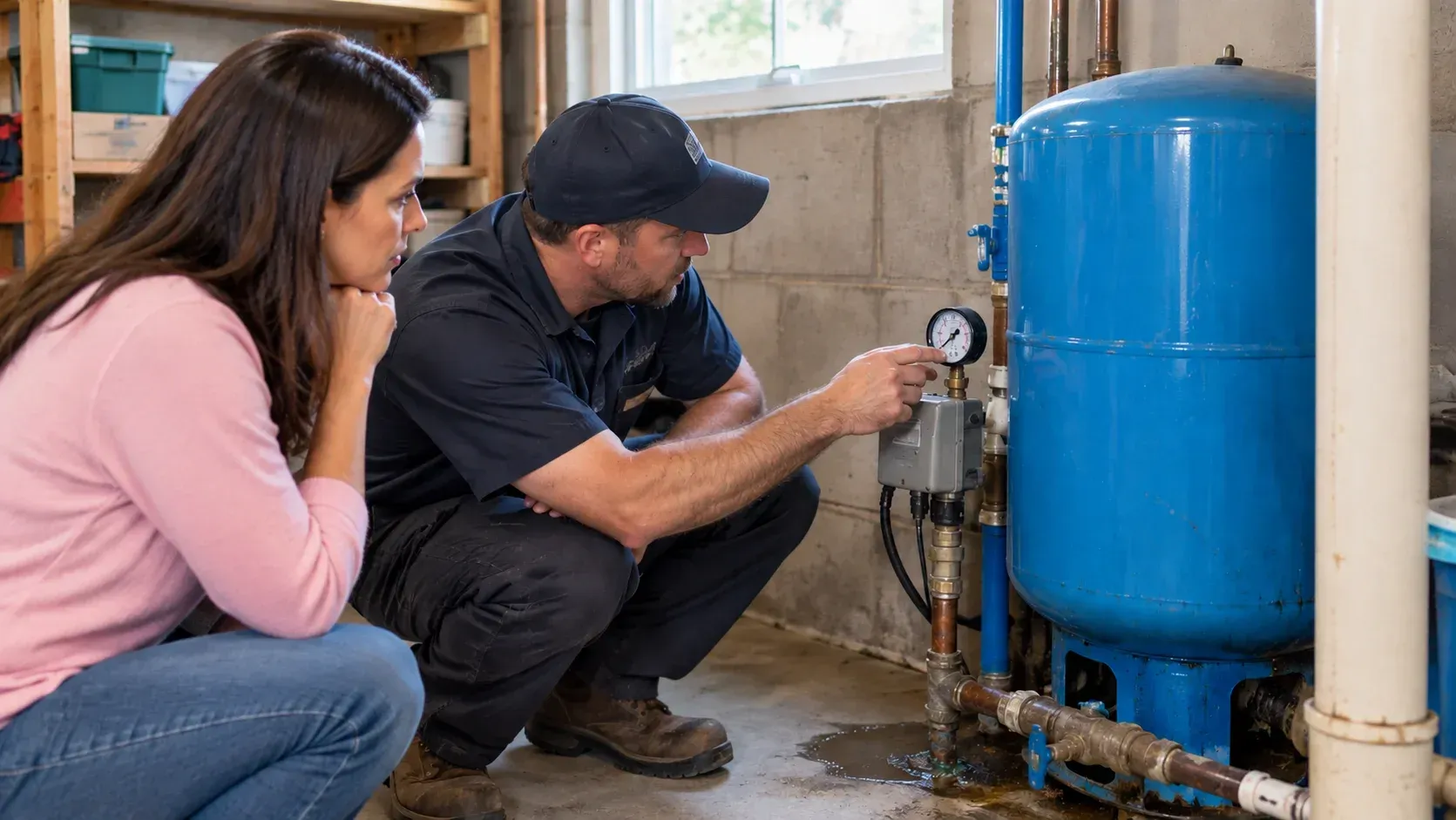
Preventing Leaks and Water Damage

Table of Contents
- Introduction
- Typical Cost Ranges by Water Heater Type
- What Actually Drives the Final Price
- Tank vs. Tankless: A Cost Comparison
- Why Tracys Landing and Calvert County Homes Vary in Cost
- Decision Framework: Choosing the Right Replacement
- Common Misconceptions About Water Heater Costs
- A Realistic Scenario
- What Online Advice Often Overlooks, and the Trade-Offs That Follow
- Conclusion
- Get an Accurate Water Heater Replacement Estimate
- Frequently Asked Questions
Key Takeaways
- A standard 40 to 50 gallon tank water heater replacement in Calvert County typically costs between $1,200 and $2,800 including labor, while tankless units usually run $3,000 to $6,500 depending on venting and gas line requirements.
- The unit's price is often the smaller part of the total cost. Venting changes, code compliance updates, and access difficulty frequently account for a larger share of the final bill than the appliance itself.
- Homes on well water systems, common throughout unincorporated Calvert County, may see faster mineral buildup in tank units, which affects both lifespan and long-term cost.
- Switching fuel types, such as electric to gas, adds substantial cost due to new gas line or electrical work, while replacing like-for-like is generally the most predictable price.
- Getting an in-person estimate matters more for water heater replacement than for many other plumbing jobs, because venting and access issues are difficult to assess accurately over the phone.
Introduction
Water heater replacement in Tracys Landing and the surrounding Calvert County area typically costs between $1,200 and $2,800 for a standard tank unit, or $3,000 to $6,500 for a tankless system, depending on fuel type, venting requirements, and whether the installation involves any code upgrades. Homeowners searching for this information are usually budgeting for a planned replacement or responding to a unit that has already failed, and the wide pricing range found online can make it hard to know what's realistic for a specific home.
This article breaks down what actually determines the final cost, why the same size tank can cost noticeably different amounts in different homes, and what matters most for Calvert County properties specifically, including the effect of well water on tank lifespan and the access challenges common in older coastal homes.
Typical Cost Ranges by Water Heater Type
Direct Answer: Tank water heaters generally cost $1,200 to $2,800 installed, while tankless units cost $3,000 to $6,500 installed, with the wide range in both categories driven mainly by fuel type and installation complexity rather than the tank size alone.
| Water Heater Type | Unit Cost (Typical) | Installed Cost Range | Notes |
|---|---|---|---|
| Electric tank, 40-50 gal | $400-$800 | $1,200-$2,000 | Lower installation complexity in most homes |
| Gas tank, 40-50 gal | $500-$1,000 | $1,400-$2,800 | Venting condition affects labor significantly |
| Electric tankless | $600-$1,500 | $2,500-$4,500 | May require electrical panel upgrade |
| Gas tankless | $1,000-$2,500 | $3,500-$6,500 | Often needs larger gas line and new venting |
These figures reflect general market ranges rather than a specific quote, since actual cost depends on the variables below.
What Actually Drives the Final Price
Fuel type and existing infrastructure. Replacing a gas unit with another gas unit, or electric with electric, is typically the most predictable, lower-cost scenario because existing lines can usually be reused. Switching fuel types requires running a new gas line, which can add $500 to $1,500 depending on distance and whether the line passes through finished walls.
Venting requirements. Older homes sometimes have venting that no longer meets current code, particularly if a furnace was replaced with a high-efficiency unit that vents differently. This labor and material cost is often underestimated in online guides that focus mainly on appliance price.
Access and location. A water heater in an easily accessible utility closet costs less to replace than one in a cramped crawl space or basement with limited clearance, since difficult access adds labor time.
Code compliance updates. Common examples include adding a drain pan, installing an expansion tank, or upgrading a relief valve discharge pipe. A licensed plumber generally won't leave a system out of compliance, so these are typically required regardless of whether the homeowner requests them.
Removal and disposal. Most quotes include hauling away the old unit, but it's worth confirming this is included rather than assumed.
Tank vs. Tankless: A Cost Comparison
The upfront cost difference is significant, but the comparison isn't simply about which option is cheaper.
| Factor | Tank Water Heater | Tankless Water Heater |
|---|---|---|
| Upfront installed cost | Lower, $1,200-$2,800 | Higher, $3,000-$6,500 |
| Typical lifespan | 8-12 years | 15-20 years |
| Space required | Larger footprint | Compact, wall-mounted |
| Energy efficiency | Lower, standby heat loss | Higher, heats on demand |
| Installation complexity | Usually straightforward if like-for-like | Often requires new gas line, venting, or electrical work |
| Best fit | Homes prioritizing lower upfront cost | Homes prioritizing space savings and long-term efficiency, willing to pay more initially |
A tankless system's higher upfront cost is sometimes offset over its longer lifespan and lower operating cost, but this depends on usage patterns and whether the home's existing gas line and venting can support a tankless unit without significant modification. For a home with an undersized gas line, the installation cost can approach the higher end of the range, changing the long-term comparison substantially.
Why Tracys Landing and Calvert County Homes Vary in Cost
Calvert County includes a mix of older waterfront cottages, mid-century ranch homes, and newer construction, and a home's age and layout genuinely affects replacement cost.
Homes on well water, common throughout unincorporated areas of the county including much of Tracys Landing, tend to have harder water with higher mineral content than municipal supplies elsewhere in the county. This accelerates sediment buildup inside a tank water heater, which can shorten its practical lifespan below the typical 8 to 12 year range. This doesn't change the cost of replacement directly, but it affects how often a well water household should expect to face that cost.
Older waterfront and cottage-style homes sometimes have tighter mechanical spaces than newer construction, which can increase labor time. Homes with limited vehicle access can also see a modest cost increase if equipment needs to be carried farther to the installation site.
Decision Framework: Choosing the Right Replacement
- Identify why the current unit failed. Normal age-related failure usually points toward a simple like-for-like replacement. Premature failure, from sediment buildup or high water pressure, may call for a different approach.
- Determine household hot water demand. Multiple bathrooms with simultaneous use may need a larger tank or a properly sized tankless unit, since undersized tankless systems can struggle to keep up.
- Assess existing infrastructure. Check whether current gas line size, venting, and electrical capacity can support the replacement without modification. This is where most cost surprises originate.
- Compare upfront cost against expected lifespan. Tankless suits homeowners planning to stay long-term; a tank replacement may fit a shorter ownership horizon.
- Get an in-person estimate before finalizing. Venting, access, and code requirements vary enough by home that a phone estimate is inherently less accurate.
Common Misconceptions About Water Heater Costs
Common belief: The advertised price of a water heater unit is close to the total replacement cost.
What is actually true: The unit itself is often 30 to 50 percent of the total installed cost, with labor, venting, code compliance items, and disposal making up the remainder.
Why the distinction matters: Homeowners who budget based only on the appliance price at a hardware store are frequently surprised by the full quote, which reflects the true scope of the work.
A Realistic Scenario
Consider a hypothetical example: a homeowner in Tracys Landing has a 12 year old gas tank water heater in a basement utility area that stops producing hot water. The home is on well water. A plumber's inspection finds significant sediment buildup, consistent with well water mineral content over more than a decade, and venting that no longer meets current code because an earlier furnace replacement changed the shared chimney's draft characteristics.
The replacement quote includes a new 50 gallon gas tank unit, a code-required venting correction, and a drain pan since the unit sits near finished flooring. The total lands above the lower end of the typical range because of the venting correction, something the homeowner hadn't anticipated from general online research.
What Online Advice Often Overlooks, and the Trade-Offs That Follow
Generic cost guides frequently present a single price range without explaining what pushes an installation toward the higher or lower end. Venting condition is rarely mentioned as a major cost factor, despite often being one of the largest variables in gas water heater replacement, particularly in homes where furnace equipment has been updated separately over the years. Well water's effect on tank lifespan is also missing from most general guides, since much online content doesn't account for the difference between municipal and private well water in mineral content and its effect on sediment buildup. Permit requirements are sometimes left out of estimates entirely, though many jurisdictions require one when venting or gas line work is involved.
These gaps connect directly to real trade-offs homeowners face. Choosing the lowest quoted price without reviewing what's included carries a risk of selecting an installation that omits code-required components, which can result in a failed inspection or follow-up work at additional cost. Delaying replacement of a unit showing signs of failure, such as rust-colored water or a leaking tank, carries a different risk: a sudden failure can cause water damage that a planned replacement avoids. Selecting a tankless system primarily for its longer advertised lifespan may also overlook that these units require more specialized service, and not every plumbing company services them as frequently as tank units.
This information reflects general cost patterns rather than a specific quote. The only way to know the actual cost for a particular home is through an in-person assessment, since venting condition, access, and infrastructure vary enough between properties that estimates without a site visit carry meaningful uncertainty.
Conclusion
Water heater replacement cost in Tracys Landing and the broader Calvert County area typically falls between $1,200 and $2,800 for a tank unit and $3,000 to $6,500 for tankless, but the appliance price itself is often a smaller part of the total than expected. Venting condition, existing gas line or electrical capacity, code compliance requirements, and installation access all meaningfully affect the final number.
For homes on well water, common throughout unincorporated parts of the county, mineral content can shorten a tank unit's practical lifespan compared to municipal water, a factor worth considering when weighing options. Fuel switching adds cost due to new infrastructure requirements, while like-for-like replacement tends to be the more predictable path.
Because so many variables are specific to an individual home, an in-person assessment provides far more accurate cost information than a general online range, which is best used as a starting point for budgeting rather than a final figure.
Get an Accurate Water Heater Replacement Estimate in Calvert County
If you're weighing water heater replacement options in Tracys Landing or elsewhere in Calvert County, an in-person assessment can identify the venting, access, and infrastructure factors that will affect your actual cost rather than a general range. There's no obligation involved, and it puts you in a better position to plan your budget with clarity. You can
contact us to ask questions or schedule an estimate.
Frequently
Asked Questions
water-heater-replacement-cost-tracys-landing
Tank size, fuel type, tank versus tankless, venting changes, code items like an expansion tank, and hauling away the old unit all affect the final price.
Is a tankless water heater worth the cost?
Tankless units cost more upfront but can last longer and use less energy. Whether they pay off depends on your hot water demand and fuel type.
Do I need an expansion tank with a new water heater?
Often, yes, if your system has a check valve or pressure reducing valve that makes it a closed system. Local code and your setup decide whether it's required.
Should I replace a water heater before it fails?
If it's past 10 to 12 years or showing rust or leaks, planned replacement helps you avoid water damage and choose the right unit without rushing.
What size water heater do I need?
Many homes with two to three people do well with a 40 to 50 gallon tank. Larger households or big soaking tubs may need more capacity or a tankless unit.